
Why Your Customers Won't Answer the Phone (and What to Do Instead)
I watched it happen in a blinds office. One person was off sick, one was on holiday, and one of the staff was making call after call to new enquiries. Mostly, nobody answered.
She wasn't doing anything wrong. She was doing exactly what most offices do. But if your customers are not answering phone calls, ringing harder won't change it. Which means the enquiries you've paid for sit on a list marked "tried, no answer" until they go quite cold.
Your office isn't doing it wrong. The channel is.
This post is Chapter 3 of our WhatsApp Follow-Up Guide for home improvement businesses.
What the unanswered calls are costing you
Every one of those enquiries cost you money before anyone picked up the phone. The ad, the bought-in lead, the directory listing. When the call goes to voicemail, that money is still spent.
Then the hours go. Someone rings, leaves a message, writes it down and tries again tomorrow. And the day after. That's time your team could have spent with customers who actually want to talk.
Meanwhile the customer hasn't stopped looking. They've probably asked a few other firms too. Whoever gets a proper conversation going first has beaten you to the punch, and you never find out why the lead went quiet. It just gets lost and forgotten about.
If you want to see what that adds up to for your business, put your own numbers into the Lead Loss Calculator.
Why customers don't answer the phone (or open your emails)
Put yourself in your customer's shoes. A number they don't recognise flashes up while they're at work, on the school run or sat down for their tea. Most people let it ring. 45% of UK consumers say they ignore all unknown calls (Textmagic, 2025). It's not personal. They just don't know it's you.
So the office falls back on email. Even with a welcome email, most people never open it. It lands in an inbox full of junk they check once a week, if that. A lazy email that doesn't get read does nothing for you.
A plain text isn't much better. From a number they don't know, it sits in the same pile as the parcel scams and the "your account is on hold" messages.
None of that means people don't want to hear from you. They filled in your form. It means you're trying to reach them in the places they've learned to ignore.
What to do instead: send it where they'll actually see it
You can start on these on Monday, whoever you end up working with.
1. Go where your customers already are
WhatsApp is where people talk to their family, their mates and the school. 90% of UK online adults used it in May 2025, and 74% were on it on an average day (Ofcom, 2025). WhatsApp messages are also reported to have a 98% open rate, compared with around 20% for email (WhatsApp Business blog, 2023). It's the app they check all day, so your message gets seen while your business is still fresh in their mind.
2. Make the first message worth replying to
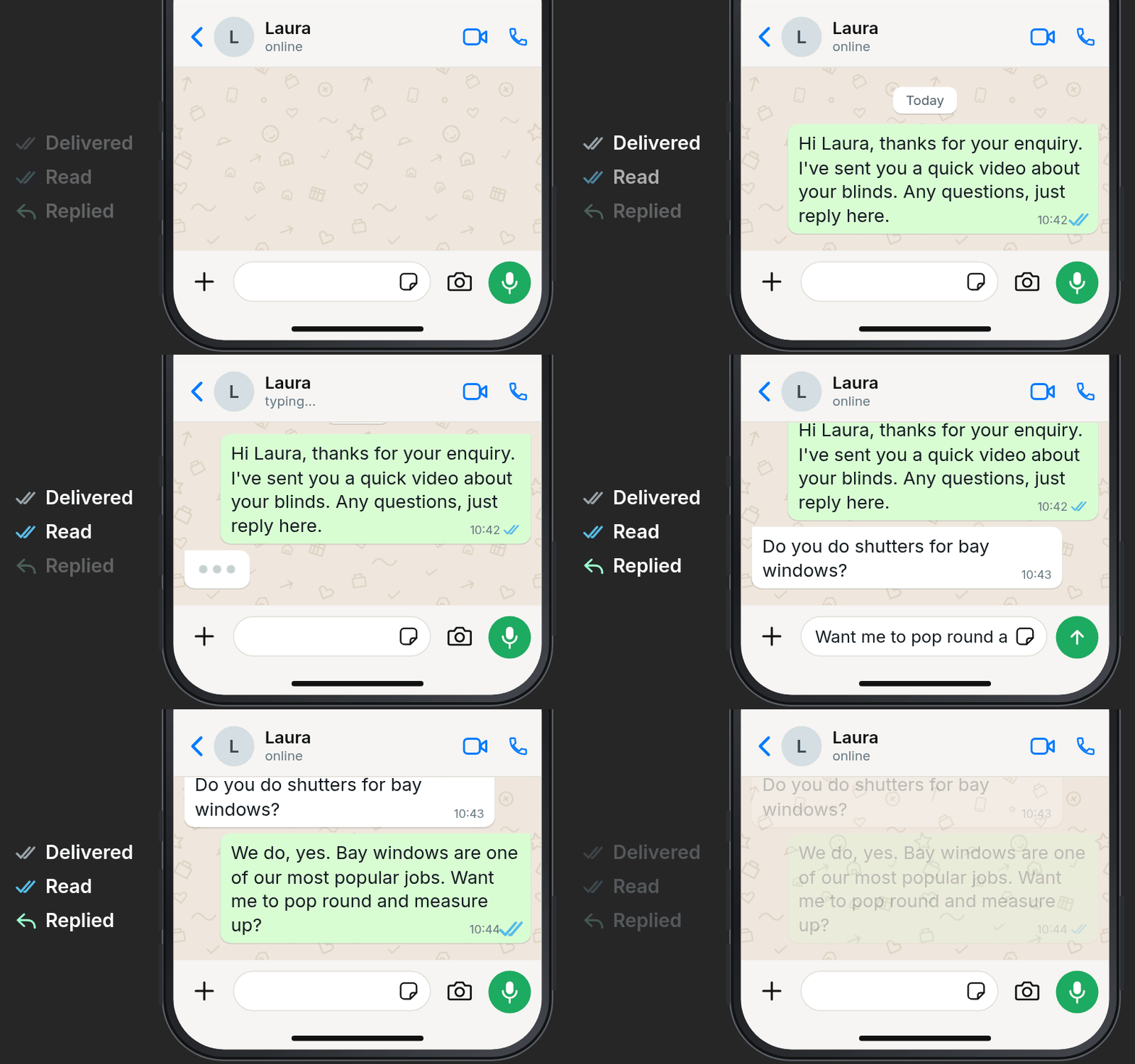
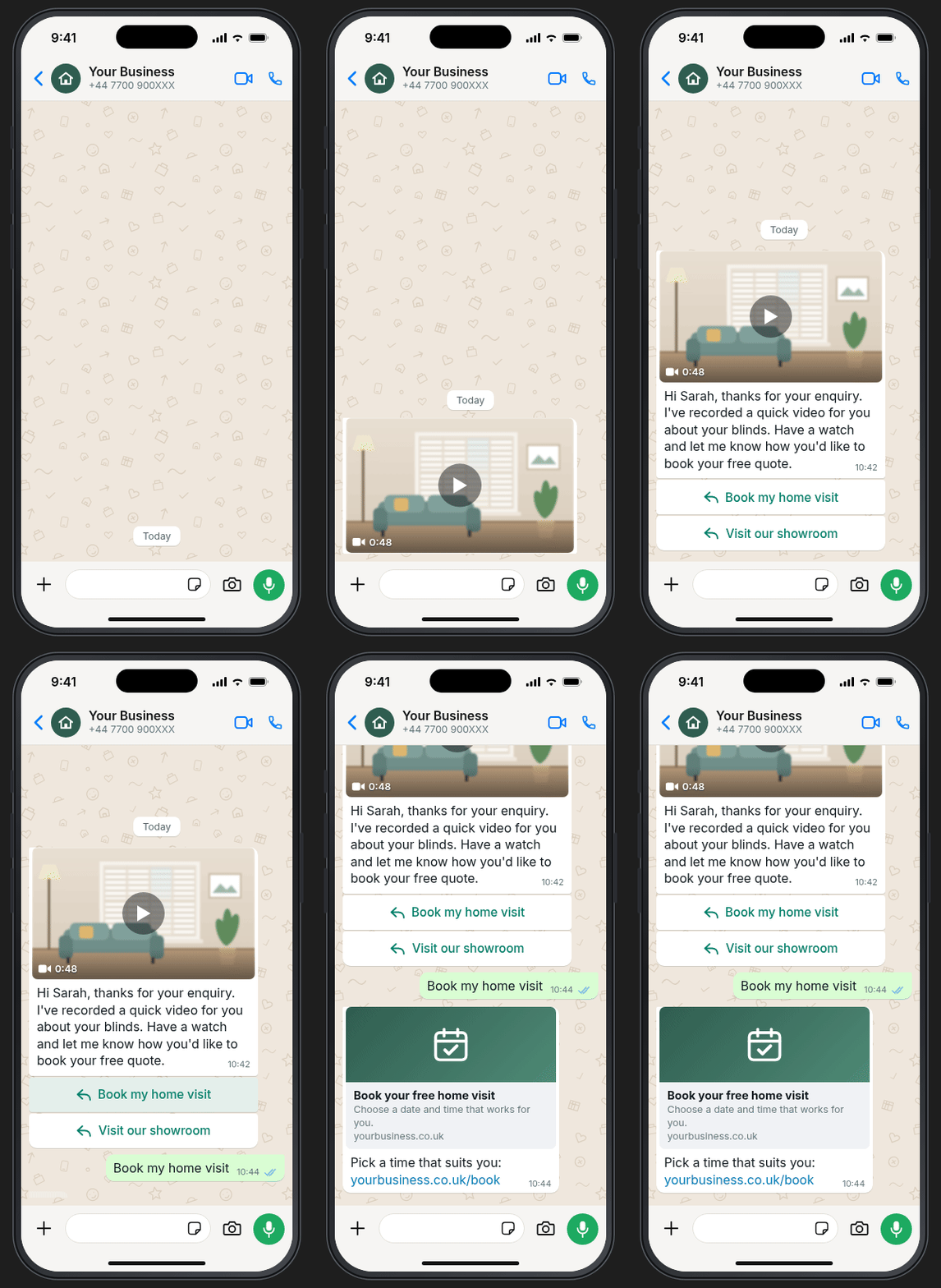
A WhatsApp message can carry a lot more than a missed call. Your business name. A short video from you, so they see your face and hear your voice before you've even met. And a couple of buttons they can tap to book or ask a question, all in the one message.
That last bit matters. Make it easy to reply and people do. A quick question here, a "can you come out Thursday?" there. Conversations lead to conversions.
3. Keep ringing, just ring second
Nobody's saying stop picking up the phone. Keep ringing. The difference is they've already heard from you on WhatsApp and seen your face, so you're not a stranger anymore. And the ones who replied or tapped to book go to the top of the list, so your team rings the warm ones first.
If you're wondering whether WhatsApp is professional enough for a trades business, look at it from the customer's side. A personal video from the owner, straight away, or a missed call from a number they don't know. I know which one I'd rather get.
How we do it
This is the bit you don't have to do. We build it and run it for you. Every new enquiry gets a WhatsApp from your business straight away, with a short video from you. You record it once, from our script, and it says hello to every enquiry, day or night.
Then we follow up until they book a measure, a quote or a consultation. WhatsApp has rules for businesses, and we handle them. We write your messages, get them approved and set your enquiry forms up to ask for their OK to hear from you on WhatsApp. When someone replies, the conversation is right there for your team to pick up. Here's more on why we use WhatsApp for it.
Where you send it matters. So does how fast. I covered that in How Quickly Should You Reply to a New Enquiry?
Stop ringing people who'll never pick up
You don't need more leads. You need to reach the ones you've already paid for, in the place they'll actually see you. No more call after call going to voicemail. No more welcome emails sat unread.
Keep ringing, but give them something they'll actually reply to. Book the call and see how.
Free Lead Conversion Strategy Call
Want to see what your missed leads are costing you? Try the Lead Loss Calculator.
This post is Chapter 3 of the WhatsApp Follow-Up Guide, which covers the whole picture, from why leads go cold to what we set up for you.
Next in the guide, Chapter 4: Why a 30-Second Video From You Wins Trust Before You've Even Met
Sources: 45% of UK consumers ignore all unknown calls. Textmagic, UK consumer survey, September 2025.
90% of UK online adults used WhatsApp in May 2025, and 74% accessed it each day. Ofcom, Online Nation 2025, published 10 December 2025.
WhatsApp messages have a 98% open rate, compared with around 20% for email (reported). WhatsApp Business blog, 15 August 2023.